
It’s long been said that we live in an information age. If this information is to be believed, then I must confess – I’m disappointed. Of course, as a transnational public sphere, the internet has produced innumerable benefits to the way in which society communicates and receives information. Yet, tethered by little restraint, ethics or transparency, the endless communicative flows crossing these digital plains at any one moment has subsequently degraded the quality, character and authority of what we constitute as ‘information’.
Take X, for example. Once the town square of conversation it has since become the marketplace of engagement by monetising forms of user interaction. Feeds now reward AI bots and political grifters who churn out emotionally fuelled, buzzword-laced, money-driven slop. Stories are misconstrued or falsified, made to fit within a wider narrative that storytellers – human or artificial – believe will play to their audiences’ emotions, beliefs and whims. This is a particularly potent drug for a species hooked on news, and one which is increasingly losing trust in traditional outlets to deliver it.
The malaise of political polarisation consequent of the internet has inaugurated a new set of problems which have baffled politicians and policymakers alike. We are at a new conjecture where everything is subjective; everyone can share whatever information they want online regardless of its character, quality or legitimacy, and even commercialise off it. Their only probable solution seems to be introducing some form of digital ID, but this is a Rubicon few outside the non-governmental technocratic elite wish to cross.
This is not a new question with mass communications, at least, in the US. The issue, however, is the unique dimension it has taken in the current day.
See, in 1949 the issue was scarcity. Few had the ability to operate on television or radio airwaves. Recognising that this was unhealthy for public democracy, the Federal Communications Commission (FCC) brought in ‘the fairness doctrine’. This meant that broadcasters were obliged to provide neutral coverage and showcase diverse public opinions on controversial public issues. Over time this encompassed Vietnam, welfare, unionism, nuclear weaponry, racial desegregation and more. The doctrine wasn’t a means of censorship. Stations were actively incentivised to abide; they weren’t forced to provide equal time for every opinion nor prohibit controversial speech, but more partisan messaging was commercially unattractive as it triggered additional obligations regarding broadcast rights.
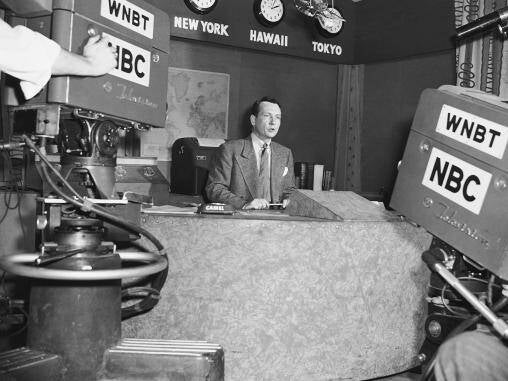
The doctrine symbolised the wider liberal philosophy guiding America across the post-war era – the belief that an ethical degree of government intervention was necessary to ensure a stable democracy. In this case, it was the belief that broadcasting was a public resource, conducted on publicly owned airwaves. The select-few operating them were deemed public guardians, obliged to wield their power for the common good. Meanwhile for audiences, it was the belief that you could present the facts and opinions of a story and let them come to their own conclusions regarding its meaning. So popular was the doctrine that it was enshrined as constitutional by the Warren Court – considered the most liberal supreme court in modern US history – in 1969.
However, this consensus was never unilateral. The fairness doctrine was long the ire of conservative ideologues who saw it as a violation of the First Amendment by dissuading broadcasters from discussing controversial issues and believed the free market could guarantee a greater diversity of opinion. What’s more, the initial issue of scarcity was making way for abundance, with cable television, independent stations, FM radio and satellite broadcasting providing the public an array of options to choose from. This made the doctrine, moulded around combatting media oligopoly, increasingly appear archaic and obsolete.
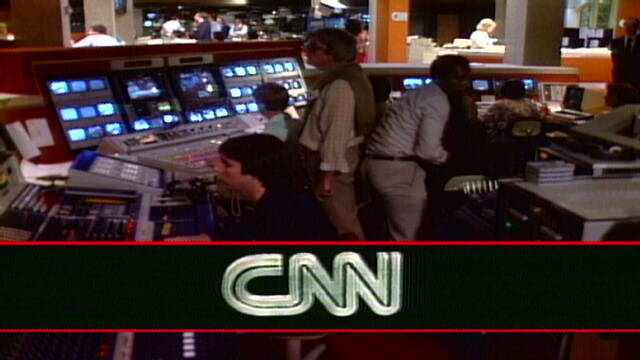
The fairness doctrine met its demise amid the decade where many old ways of doing things did too: the 1980s. President Reagan’s strategy was clever, but cautious, by appointing fellow doctrine critics within the FCC. Alas, come 1987 it met its demise at the hands of Chairman Dennis Patrick. Congress reacted with hostility to this internal coup and quickly passed legislation to try reinstating the doctrine. Yet, this fell on deaf ears as President Reagan vetoed their efforts, cementing its death.
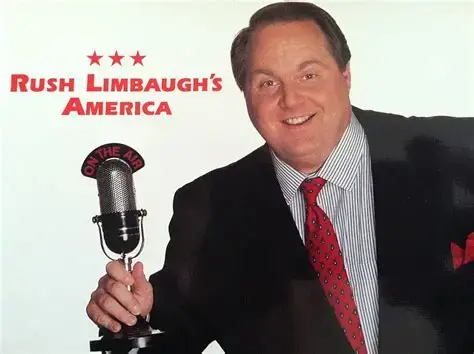
It took time for the consequences to settle in, but they soon became a structural reality. Freed from obligation and incentivised by new profit streams, broadcasters, both new and old, began to carve their market niches around specific political beliefs, opinions and prejudices. The introduction of FOX News in 1996 was most indicative of this, as was Rush Limbaugh, who epitomised the growth in radical talk radio; but even as time went on, MSNBC rebranded itself as a liberal counterweight. It showed that the principle of scarcity had given away to abundance. Partisanship was no longer a regulatory risk, but a business model.
What we are living through now is a period of super-abundance, where we don’t just have the ability to choose how we receive information, but the means to project our own. On such a multinational plane, there is no easy antidote to what Congress and Reagan settled in 1987. The issue with digital ID are its concerns with identity rather than truth. Instead, we must return to the importance of critical thinking and a return to the question we stopped asking: what do we owe each other when we speak in public?
Add comment
Comments